Imagine you're midway with an essential manufacturing run when a driver flags weird analyses on a flow meter. The line can not wait, and delivery deadlines impend. Contacting an onsite team to take care of onsite calibration may just be the lifeline your plant needs. Rather than delivery equipment offsite and encountering days of lost manufacturing, a technician arrives, tools in hand, ready to tackle everything from pressure checks to temperature level tweaks-- exactly on the factory floor.
Why Onsite Calibration Matters
Typical calibration often means leaving tools-- whether it's a hardness tester or a set of torque wrenches-- and sending them to a laboratory. That process can introduce weeks of downtime and hidden prices. In contrast, onsite calibration brings the laboratory to you. This strategy decreases interruption, maintains your group dealing with calibrated tools, and keeps product top quality without the logistical frustration.
Lessening Downtime
Every hour your plant sits still can set you back thousands. By adjusting on location, you deal with inconsistencies in actual time. A service technician can spot-check sensors for drift, change your dampness analyzers, or confirm bit counters without stopping the whole line. The outcome? Your equipment is back online much faster, and your bottom line remains healthy and balanced.
Guaranteeing Consistency and Accuracy
Constant ecological changes-- temperature level swings, humidity changes-- can influence tool analyses. Onsite sees allow for calibration under real operating conditions. That implies your stress assesses, torque wrench collections, and various other precision instruments are tuned where they function, not in an idealized laboratory setting that mechanical calibration doesn't show real-world obstacles.
Core Instruments for Onsite Calibration
Virtually any kind of measurement gadget can gain from onsite focus. Below are a couple of usual candidates:
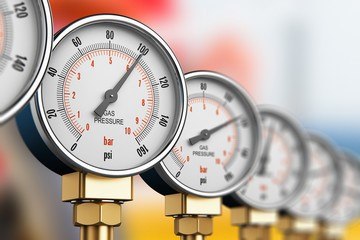
- Pressure assesses and transducers-- making sure secure line stress and leakage detection Circulation meters-- verifying accurate flow prices for liquids and gases Temperature level probes and thermal sensing units-- maintaining procedure limits Firmness testers-- validating product homes during manufacturing Torque wrenches-- guaranteeing right fastener stress without straining Moisture analyzers-- preventing item perishing or discrepancy Particle counters and nondestructive screening sensors-- keeping an eye on air high quality and structural integrity
Case Study: Flow Meter Calibration
In one food processing plant, the milk line had problem with inconsistent milk flow rates. Each time they readjusted pasteurization temperature, the circulation meter seemed to unclothe resistance. An onsite calibration team showed up equipped with a mobile contrast criterion. Within hours, they confirmed the meter's performance at several circulation points, made great changes, and recorded the outcomes. Production resumed without a 2nd shift lost, and the quality division gained self-confidence in every carton of milk produced.
Finest Practices for Smooth Onsite Calibration
Whether it's your first time arranging a check out or you're a seasoned pro, these ideas will assist you obtain one of the most from an onsite calibration service:
- Prepare a list of tools and their last calibration dates. Clear work area around crucial sensing units and determines for very easy accessibility. Note any recent anomalies or changes in your upkeep logs. Coordinate with change supervisors to prepare calibration without interrupting essential procedures. Gather ecological information-- ambient temperature level and humidity-- to show to the professional.
Environmental Considerations
Onsite calibrations shouldn't neglect the truth that your plant floor isn't a cleanroom. Dirt bits can influence sensor heads, and heat from nearby equipment can alter analyses. An excellent calibration companion uses nondestructive methods and takes environmental elements into account, sometimes also bringing portable shields or rooms to isolate vital zones.
Documents and Traceability
Among the biggest perks of expert instrument calibration services is the strenuous paperwork. After calibrating each gadget-- be it a torque wrench or a stress transmitter-- you get a certification detailing as-found and as-left analyses, standards utilized, and dimension uncertainty. This documents not only pleases audits however additionally aids you track tool efficiency patterns gradually.
Real-World ROI of Onsite Calibration
It's very easy to see calibration as an expense facility. But when you factor in prevented recalls, fewer service warranty cases, and nonstop manufacturing, the numbers begin to look very different. Below's exactly how onsite calibration can pay for itself:
Reduced downtime-- every hour conserved includes revenue. Enhanced first-pass return-- fewer problems slide via. Extended equipment life-- much less wear from running out-of-tolerance. Governing conformity-- preventing fines and closures. Enhanced client depend on-- regular product top quality.Success Story: Hardness Tester Alignment
A metal construction shop saw variants in solidity readings on steel elements. Sending out the firmness tester back to a main lab would have stopped manufacturing for a week. Instead, an onsite browse through altered the indenter pressure and validated the scale block standards. The store resumed machining within 24 hours, and the welding division reported more powerful, a lot more trusted components.
Picking the Right Onsite Calibration Partner
Not all provider are equivalent. Seek specialists that specialize in both field adjusting and nondestructive confirmation approaches. Qualifications from nationwide metrology institutes, experience with a variety of instruments, and fast turn-around times are essential factors. An excellent partner will certainly also use preventative upkeep guidance, helping you intend your following see before a gauge drifts out of specification.
Conclusion
In today's competitive production landscape, accuracy and uptime go hand in hand. Onsite calibration bridges the void between lab-grade accuracy and real-world effectiveness. Whether you're validating sensing units in a chemical plant or making certain the appropriate torque on critical assemblies, the advantages are instant: much less downtime, consistent product high quality, and solid audit trails. For groups ready to experience the difference, EML Calibration is a source that combines deep technical experience with fast, reputable area solution.
Name: EML Calibration
Address: 998 Elm Hill Pike, Nashville, TN 37210, United States
Phone: (888) 846-4614
Website: https://www.emlcalibration.com/